
What Should You Do If a Crown or Filling Breaks?
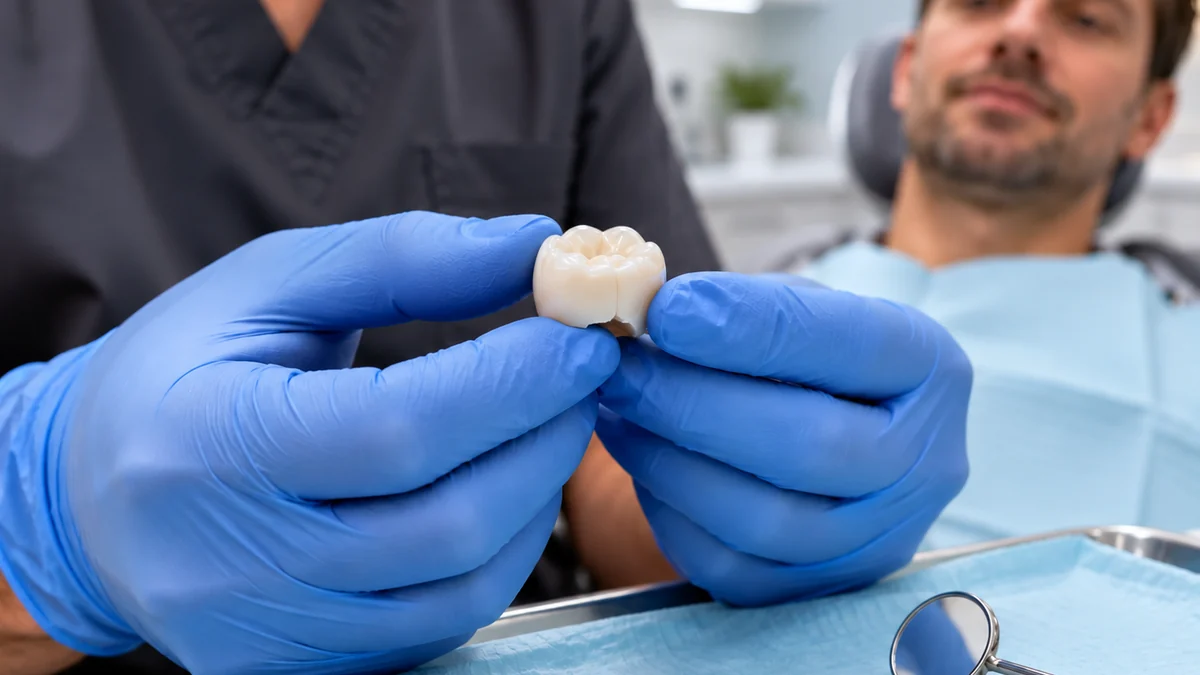
You feel something hard while eating and discover a piece of filling in your mouth. Or a crown comes away, leaving the tooth underneath exposed. The first question is usually practical: what should you do before you can see a dentist?
Contact a dental office, protect the area from further damage and keep any piece you recover. Do not try to glue a crown back on, file the tooth or force a restoration into place.
A broken crown or filling needs assessment even if it is painless. If you are looking for an emergency dentist in Gloucester or Ottawa, Dr. Sara Syed Dentistry can advise you about arranging care based on what happened and your symptoms.
Work out what happened without probing the tooth
You do not have to identify the material before calling. What looks like a piece of filling could include tooth structure, and a crown that has come off may or may not be reusable.
Gently look at the area if you can do so comfortably. Note whether there is a visible gap, a sharp edge or a crown that has come away completely. Avoid pulling at anything still attached.
If a loose piece is already free in your mouth, remove it carefully and put it in a clean container. Do not leave it in your mouth where it could be swallowed.
Tell the office what you observed without trying to settle the diagnosis. “A crown came off while I was eating, and I have it with me” is more useful than deciding at home that it only needs cement.
If you cannot see the area, that is fine. A description of the event and any discomfort is enough to begin the conversation.
What to do until you receive dental advice
Avoid chewing on the affected tooth. Choose foods that do not require heavy biting, and avoid hard or sticky foods that could place more stress on the area.
Continue gentle cleaning, but do not dig into a gap with a pin, toothpick or other tool. If temperature changes are uncomfortable, avoid foods and drinks that trigger the sensation while you seek advice.
Do not use household glue. It is not designed for this purpose and can complicate treatment. Do not file a rough edge or force a crown back into position, even if it appears to fit.
Keep the recovered crown or fragment for the dentist. Bringing it does not guarantee that it can be reused, but it may help the assessment.
Ask the dental team what is appropriate while you wait rather than improvising a repair. If you need medication advice, consult a dentist or pharmacist who can consider your health and other medicines.
The Ontario Dental Association’s dental emergency guidance provides general information about getting help for dental injuries and lost restorations. Your own instructions should reflect the specific tooth and symptoms.
Signs that need urgent attention
Mention significant pain, swelling, fever, drainage or difficulty eating when contacting the office. Also report a recent blow to the mouth or a tooth that feels loose.
A restoration that breaks without pain still deserves prompt dental advice. Comfort alone does not show whether the remaining tooth is protected or whether decay or another problem is present.
Emergency medical care is needed for difficulty breathing or swallowing, uncontrolled bleeding, severe facial swelling or a serious facial injury. Do not wait for a dental callback in those situations.
Dr. Sara Syed Dentistry’s emergency dental services page explains how to contact the practice about an urgent concern. Appointment timing and the repair needed depend on the assessment; a broken restoration does not automatically mean a same-day permanent repair.
How a dentist chooses the repair
The dentist needs to assess both the restoration and the tooth it was protecting. A crown that looks intact in your hand does not reveal the condition of the tooth beneath it.
The examination may consider remaining tooth structure, decay, damage, the fit of the restoration and the bite. Images or other tests may be appropriate depending on what is found.
Some restorations can be repaired or replaced in a relatively straightforward way. Others require a different plan because the tooth or supporting structure has changed. The dentist will explain whether reusing an existing crown is suitable or whether a new restoration is needed.
Ask what led to the recommendation. If a different type of restoration is proposed, find out what it addresses that the previous one cannot.
You can also ask whether the immediate visit is intended to provide temporary protection, complete a repair or gather information for a later appointment. That helps you understand the next steps without assuming every problem can be finished in one visit.
What to tell the office when you call
Prepare a few details:
- Was it a crown, filling or an unknown piece that came away?
- When did it happen?
- Is there pain, swelling, bleeding or temperature sensitivity?
- Does the tooth feel loose, or does your bite feel different?
- Do you have the crown or fragment?
- Was there a recent injury or recent treatment on that tooth?
If you are unsure, say so. You do not need the name of the tooth or the date of an old restoration to ask for help.
Tell the office if you cannot chew comfortably or if symptoms are getting worse. If advice was given earlier and the situation changes, call again with the new information.
Bring the saved restoration and a current medication list to the appointment. If another dentist placed it recently, mention that so relevant records can be considered.
Questions to Ask at Your Appointment
Before agreeing to the next step, ask:
- What happened to the restoration and the tooth beneath it?
- Can the recovered crown be reused safely?
- Is the proposed treatment temporary or final?
- What options are reasonable, and why do you recommend this one?
- Will another appointment be needed?
- What should I avoid until the repair is complete?
- What symptoms mean I should call sooner?
Request an estimate and an explanation of what it includes. Clear information about the treatment sequence is particularly helpful when an unexpected repair interrupts your plans.
Frequently Asked Questions
Does a lost filling need attention if it does not hurt?
Yes. Contact a dentist for advice. A painless tooth may still have exposed or weakened areas that need assessment and protection.
Should I bring the crown to my appointment?
Yes, if you have it. Keep it in a clean container rather than in your mouth. The dentist can examine it alongside the tooth.
Can a broken crown always be reused?
No. Reuse depends on the crown’s condition, its fit and the state of the tooth. A crown that appears intact is not automatically suitable to put back.
Can I use household glue to put a crown back?
No. Do not use household glue or force a crown into place. Ask the dental office for instructions and leave the repair to the treating professional.
Will the tooth need a new crown or a filling?
That depends on the examination. The amount and condition of remaining tooth structure help determine which restoration is appropriate.
Talk to Dr. Sara Syed Dentistry
If a crown or filling has broken, contact Dr. Sara Syed Dentistry in Gloucester, Ottawa. Explain what came away and any symptoms so the team can advise you about an assessment and care for the tooth.