Blog

emergency-dentist-ottawa-urgent-care-1200x800.png

September 24, 2026 Emergency Dentistry

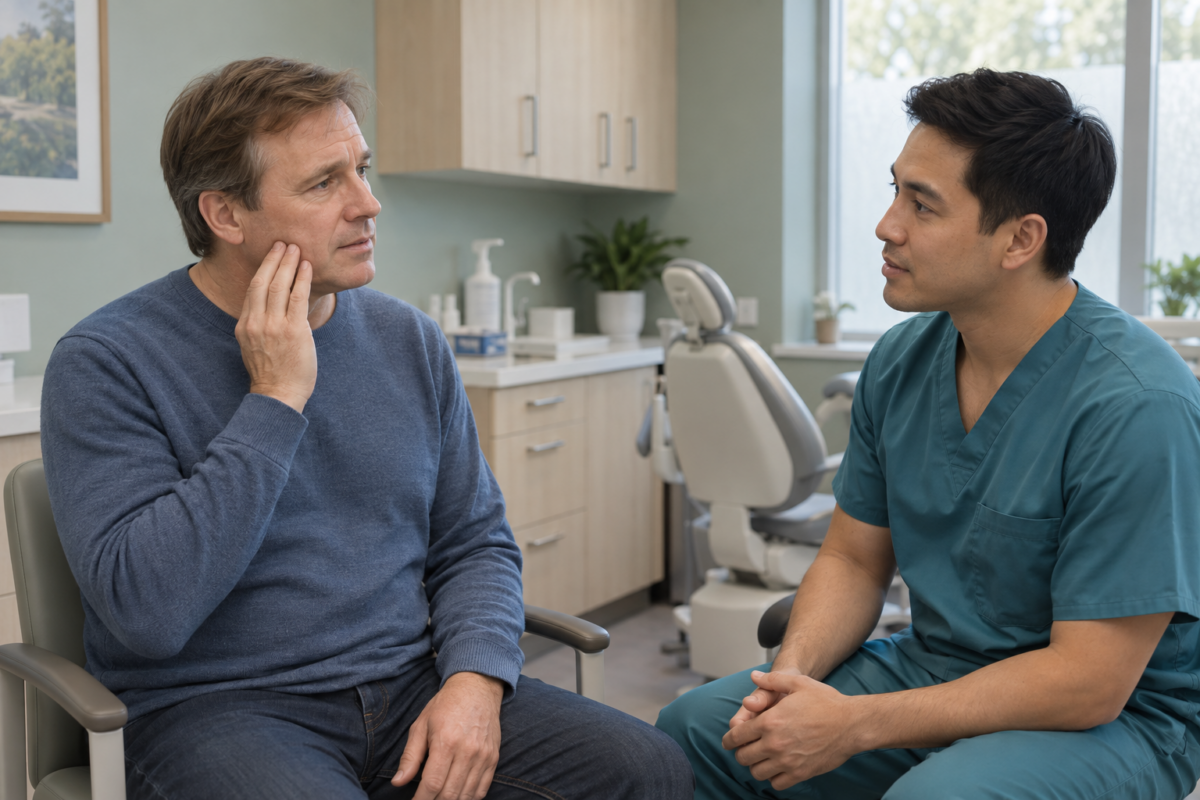
Severe or worsening tooth pain, swelling, signs of infection, dental trauma, uncontrolled bleeding, or a broken or loose tooth may require prompt dental attention. If you are unsure whether a problem can wait, calling an emergency dentist in Ottawa is a sensible first step. The dental office can ask about your symptoms and advise you on how quickly you should be assessed.

Some situations go beyond dental urgency. Trouble breathing or swallowing, rapidly increasing facial or neck swelling, major facial trauma, loss of consciousness, or bleeding that will not stop can require emergency medical care. Call 911 or go to the nearest emergency department when symptoms could threaten breathing, swallowing, or your overall safety.

This guide explains how to recognize common warning signs and what to do while arranging care. It cannot diagnose the cause of your symptoms, and the right response depends on what happened, how severe the symptoms are, and whether they are getting worse.

What Counts as a Dental Emergency?

A dental emergency is a problem involving the teeth, gums, mouth, or jaw that may need prompt professional assessment to relieve significant symptoms, control bleeding, address infection, or protect a damaged tooth. It does not always mean the situation is life-threatening, and not every dental concern needs treatment immediately.

Urgency depends on the full picture. A small chip without pain may be less urgent than a cracked tooth that hurts when you bite. Mild sensitivity that has been stable is different from pain that wakes you at night or swelling that is spreading. A loose adult tooth after an impact needs a different response than a slightly rough filling with no symptoms.

When calling the office, explain when the problem started, what you were doing when it happened, the location and severity of the pain, and whether you have swelling, fever, bleeding, trauma, or difficulty opening your mouth. Clear details help the dental team understand what kind of assessment may be appropriate.

Which Symptoms Should Prompt a Call to an Emergency Dentist?

Contact a dentist promptly if you have severe, persistent, or worsening dental pain; swelling around a tooth or in the face; a bad taste or drainage that could suggest infection; uncontrolled dental bleeding; a broken, cracked, or loose adult tooth; a filling or crown that has failed and left the tooth painful or sharp; or an injury to the teeth, gums, jaw, or mouth.

Warning signs that deserve a prompt call include:

  • Pain that is intense, worsening, or interfering with sleep, eating, or normal activities
  • Swelling of the gum, cheek, face, or jaw, particularly when it is increasing
  • Fever, feeling unwell, pus, or a persistent bad taste along with dental pain or swelling
  • A permanent tooth that is loose, displaced, broken, or knocked out
  • Bleeding from the mouth that is difficult to control
  • A sharp or unstable tooth, filling, crown, or denture that is injuring soft tissue
  • Pain or damage following a fall, collision, sports injury, or other trauma

Even when symptoms seem manageable, avoid assuming that the problem is harmless. Some dental conditions can worsen without constant pain. If you are uncertain, the office can help you decide whether you need urgent assessment or can book a regular appointment.

When Is Tooth Pain Urgent?

Tooth pain may be urgent when it is severe, does not settle, returns repeatedly, or is becoming more intense. Pain that occurs with swelling, fever, trauma, drainage, a bad taste, or difficulty biting also warrants prompt attention. Sudden pain in a tooth with a large filling or crown may signal that the tooth or restoration needs to be examined.

The location and pattern of pain can provide useful information, but they do not confirm a diagnosis. Throbbing pain, pain on biting, sensitivity to temperature, or pain that seems to spread into the jaw or ear can have several possible causes. A dentist may need to examine the tooth and surrounding tissues and may recommend diagnostic images before discussing treatment options.

Do not place aspirin or another medication directly against a tooth or gum. If you normally use over-the-counter pain medication safely, follow the package directions and ask a pharmacist or healthcare professional if you have questions about interactions, allergies, pregnancy, or medical conditions. Pain relief should not replace assessment when symptoms are severe or worsening.

What About Facial Swelling, Infection or Dental Trauma?

Facial or gum swelling can develop when inflammation or infection is present, although only a healthcare professional can determine the cause. Contact a dentist promptly when swelling appears with dental pain, tenderness, fever, drainage, a bad taste, or difficulty opening your mouth. Swelling that is rapidly increasing or spreading toward the eye, neck, or throat requires urgent attention.

Dental trauma also needs timely guidance. A blow to the mouth can damage a tooth even when the change is subtle. Call a dentist if a permanent tooth is chipped, cracked, pushed out of position, loosened, or knocked out. The American Dental Association advises keeping a knocked-out permanent tooth moist and getting to a dentist right away; avoid touching the root when handling it.

If there is a serious head or facial injury, loss of consciousness, suspected jaw fracture, trouble breathing, or heavy bleeding, seek emergency medical care. Dental treatment can follow once immediate medical risks have been addressed.

When Should You Go to the ER Instead of a Dentist?

A dentist is generally the right first call for urgent problems limited to the teeth and gums. A hospital emergency department is more appropriate when symptoms may threaten breathing, swallowing, circulation, or overall safety, or when a major injury requires medical evaluation.

Call 911 or seek emergency medical care for:

  • Difficulty breathing or swallowing
  • Rapidly spreading swelling of the face, jaw, neck, or throat
  • Uncontrolled or heavy bleeding
  • Major facial or jaw trauma, loss of consciousness, or other signs of serious injury
  • Severe illness, confusion, fainting, or other symptoms that extend beyond a localized dental problem

An emergency department may help manage immediate medical risks, but it may not provide the definitive dental treatment needed for the tooth itself. Once you are medically stable, follow-up with a dentist may still be required.

What Should You Do While Arranging Dental Care?

Call the dental office and describe your symptoms clearly. While you are arranging care, use conservative steps that protect the area without attempting to diagnose or permanently repair the problem yourself.

  • Rinse gently with warm water if there is debris in the mouth.
  • Use a cold compress on the outside of the cheek for swelling after an injury; do not place ice directly on the skin.
  • Choose soft foods and avoid chewing on the painful or damaged side.
  • Keep any broken tooth fragment, crown, or filling in a clean container and bring it to the appointment.
  • If a permanent tooth is knocked out, handle it by the crown rather than the root, keep it moist, and contact a dentist immediately.
  • Do not use household glue, sharp tools, or permanent do-it-yourself materials in the mouth.
  • If bleeding follows an injury, apply gentle pressure with clean gauze. Seek urgent help if it does not stop.

Do not delay professional care because the pain temporarily improves. Symptoms can change, and the underlying tooth or gum issue may still need attention.

Frequently Asked Questions About Dental Emergencies in Ottawa

Can severe tooth pain be a dental emergency?

Yes. Severe, persistent, or worsening tooth pain can justify an urgent dental call, especially when it interferes with sleep or eating or occurs with swelling, fever, trauma, or drainage. A dentist can assess the cause and discuss appropriate options.

Is facial swelling always a dental emergency?

Not every minor area of gum swelling is life-threatening, but new or worsening facial swelling should not be ignored. Contact a dentist promptly. If swelling is rapidly spreading or affects breathing or swallowing, call 911 or seek emergency medical care.

What should I do if I break or knock out a tooth?

Contact a dentist as soon as possible. Rinse gently, save any tooth fragment, and use a cold compress outside the cheek if there is swelling. For a knocked-out permanent tooth, handle it by the crown, keep it moist, and seek immediate dental care. Serious facial or head trauma also requires medical assessment.

Can a dental infection wait until my next regular appointment?

Do not assume it can wait. Dental pain with swelling, fever, drainage, a bad taste, or feeling unwell may need prompt assessment. Call the office, describe the symptoms, and follow its guidance. Seek emergency medical care if swelling threatens breathing or swallowing or your condition is rapidly worsening.

Should I go to the ER for a dental emergency?

For an urgent problem limited to a tooth or gum, call a dentist first. Go to the emergency department or call 911 for trouble breathing or swallowing, rapidly spreading swelling, major facial trauma, loss of consciousness, heavy uncontrolled bleeding, or other symptoms that could be life-threatening.

Contact Dr. Sara Syed Dentistry for Emergency Dental Care

If you have severe or worsening dental pain, swelling, trauma, bleeding, or a damaged tooth in Ottawa, contact Dr. Sara Syed Dentistry and explain what is happening. The team can provide guidance about arranging an assessment without promising a particular treatment or appointment time.

If your symptoms affect breathing or swallowing, swelling is spreading rapidly, bleeding will not stop, or you have sustained a serious facial injury, call 911 or seek emergency medical care. Otherwise, call the clinic at 613-746-6666 as soon as possible so the dental concern can be assessed.



dentist-gloucester-family-dentist-consultation-1-1200x900.png

August 31, 2026 Family Dentistry

Choosing a family dentist means looking at more than location alone. Services, preventive care, communication, comfort, professional standing and how well the practice fits your household can all matter when deciding where to receive ongoing dental care.

If you are comparing options for a Dentist in Gloucester, start by thinking about what your family may need now and what could become important over time. A practical choice should make it easier to ask questions, understand your care and access services that are relevant to different family members.

What Should You Look for in a Family Dentist?

When choosing a family dentist, compare practical fit, available services, preventive care, communication, comfort, professional standing and location. The right choice depends on how well the practice fits your family’s individual needs, rather than whether it performs best in one category.

A family may include people at different stages of life, so priorities can vary. One person may be mainly interested in preventive care, while another may need support for an existing dental concern.

When comparing practices, consider:

  • The range of dental services available
  • How preventive and diagnostic care is approached
  • Whether treatment options are explained clearly
  • Whether patients appear comfortable asking questions
  • How the practice supports different family members
  • The dentist’s professional standing
  • Whether the location works well for your household

No single factor needs to determine your decision. Looking at several practical considerations together can provide a clearer picture of whether a dental office may be suitable for your family.

Why Does the Range of Dental Services Matter?

A broader service range can make ongoing dental care more convenient because patients may be able to address different needs through the same practice. However, offering more services does not automatically mean better care, and the available services still need to match your family’s needs.

A practice’s services page is a useful place to start when comparing options. It can help you understand the types of dental care available without needing to research every individual treatment before contacting the office.

Families can have changing needs over time. Preventive care may be the main priority at one stage, while another family member may later need assessment or treatment for a different concern.

Rather than looking for a dental office that appears to offer every possible procedure, consider whether its dental services cover the types of care your household is most likely to need.

It can also be useful to ask how care is handled if a service is required that the practice does not provide. No family dental practice needs to offer every treatment to be a practical option.

How Important Is Preventive Care When Choosing a Dentist?

Preventive care is an important part of ongoing dentistry because examinations, cleanings and individualized planning help a dental team monitor oral health over time. The appropriate approach and visit schedule should depend on each person’s findings, risk factors and clinical needs.

When comparing a family dentist, review how the practice describes diagnostic and preventive dental care.

Preventive dentistry is not simply about following the same schedule for every patient. Dental needs can differ based on oral health, previous findings, existing dental work and other factors identified during an assessment.

This can be especially relevant when choosing a dentist for several family members because children and adults may not need exactly the same type or frequency of care.

Preventive care may include:

  • Examining the teeth, gums and surrounding oral tissues
  • Monitoring changes over time
  • Identifying areas that may need further attention
  • Discussing brushing, flossing and other home-care habits
  • Recommending future care based on individual findings

Preventive recommendations should be individualized rather than based on one fixed schedule for everyone.

What Should You Notice About Communication and Comfort?

Look for a dental team that explains information clearly, answers questions and gives patients space to discuss concerns. Good communication can help both adults and children understand their care, while a comfortable environment can make it easier to speak openly about dental needs.

When comparing practices, pay attention to how information is presented. Dental care can involve unfamiliar terms and different treatment options, so clear explanations can make decisions easier to understand.

Useful signs of strong communication include:

  • Clear explanations of findings and treatment options
  • Opportunities to ask follow-up questions
  • Respect for patient concerns
  • Information presented in understandable language
  • An approach that takes different patient needs into account

Comfort can mean different things to different people. A child may need information explained differently from an adult, while someone who feels nervous about dental visits may value having their concerns acknowledged before care begins.

Information about a practice’s approach to patient-focused dental care may provide useful context when you are deciding whether to contact the office.

How Can Location and Convenience Affect Your Choice?

A practical location can make ongoing dental care easier to maintain, particularly when several family members may need appointments over time. Location should not be the only deciding factor, but a dental office that fits naturally into your routine can make regular care more manageable.

Dr. Sara Syed Dentistry is located at 2160 Montréal Rd #1, Ottawa, ON K1J 1G4.

If you are searching for a Dentist in Gloucester, consider how a practice’s location fits with work, school and other family responsibilities.

The closest dentist is not automatically the best fit for your household. It can make sense to balance convenience with other considerations such as services, communication, preventive care and comfort.

If practical details such as office hours, accessibility or scheduling matter to your decision, contact the practice directly rather than making assumptions about information that is not clearly stated.

How Can You Check a Dentist’s Professional Standing?

Patients in Ontario can verify a dentist’s professional registration through the province’s dental regulator and its public register. This provides an independent way to confirm professional standing while you compare practices, rather than relying only on marketing claims or descriptions found on a dental website.

Dentists practising in Ontario are regulated by the Royal College of Dental Surgeons of Ontario.

The College maintains a public register that patients can use to look up dentists and review available registration information.

This does not need to become a complicated part of your search. It is simply one practical step that can be considered alongside services, location, communication and overall fit.

Be cautious about using advertising terms such as “best,” “top” or “most trusted” as a substitute for checking information directly.

Professional registration is something patients can verify independently when comparing dentists in Ontario.

What Questions Can You Ask Before Choosing a Family Dentist?

Before choosing a family dentist, ask questions that help you understand the services available, the approach to preventive care, how treatment options are explained and whether the practice can support different family members. A short list of practical questions can make comparing dental offices easier.

You do not need to prepare an extensive checklist. Focus on information that matters to your household.

Useful questions include:

  • What types of dental services does the practice provide?
  • How is preventive care approached?
  • How are treatment options explained when there is more than one possibility?
  • Can the practice support patients at different stages of life?
  • How can patients ask questions about a new dental concern?
  • What information should a new patient review before contacting the office?

You can also ask about specific concerns that are important to your family.

The purpose of these questions is not to find one perfect answer. Instead, they can help you understand how the practice approaches care and whether that approach seems compatible with your expectations.

Frequently Asked Questions About Choosing a Family Dentist in Gloucester

Do I Need to Choose the Closest Dentist to My Home?

No. The closest dental office may be convenient, but location is only one part of the decision. You should also consider services, communication, preventive care, comfort and professional standing when deciding whether a dentist may be a practical fit for your family.

Should a Family Dentist Offer Every Dental Service?

No. A family dentist does not need to provide every possible dental treatment. A broader service range can be convenient, but the more important consideration is whether the available care suits your family’s likely needs and how additional care is coordinated when another service is required.

How Often Should My Family See a Dentist?

There is no single visit schedule that is appropriate for every person. How often someone should see a dentist depends on individual oral health, risk factors, previous findings and clinical needs, so different members of the same family may receive different recommendations.

What Is a Good First Step When Comparing Dentists in Gloucester?

Start by reviewing each practice’s services, location and patient information, then contact the office with questions that matter to your household. This gives you a clearer understanding of the practice before deciding whether you would like to arrange an assessment or routine visit.

Talk to Dr. Sara Syed Dentistry About Family Dental Care in Gloucester

Choosing a Dentist in Gloucester involves considering how several factors work together. Services, preventive care, communication, comfort, professional standing and location can all help you decide whether a practice may fit your family’s ongoing dental needs.

Dr. Sara Syed Dentistry is located at 2160 Montréal Rd #1, Ottawa, ON K1J 1G4. You can review the practice’s services for more information about the care available and contact Dr. Sara Syed Dentistry with questions about whether the practice may be a practical option for your family.


Sara Syed Dentist logo for website footer

PASSIONATE ABOUT YOUR TEETH


EMERGENCY DENTAL CARE

Call us now if you are experiencing a dental emergency,
we will respond swiftly and be happy to assist you.


Copyright Dr. Sara Syed Dentistry. All rights reserved.


Top rated Ottawa dental practice badge - Dr. Sara Syed Dentistry


Skyfall Blue logo