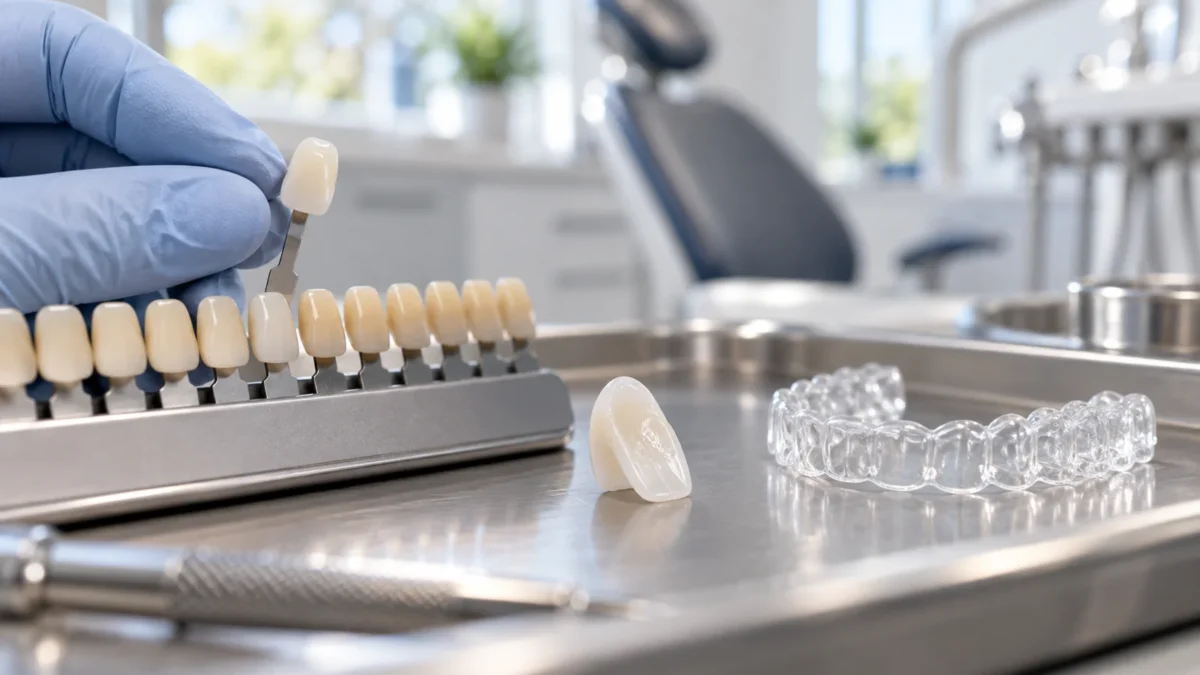
Whitening, bonding and veneers change different things. Whitening lightens natural tooth colour. Bonding adds tooth-coloured material to selected areas, while veneers cover the visible front surface of a tooth. Choosing between them starts with what you want to change, followed by an assessment of tooth health, existing dental work and your bite.
That means a brighter smile, a repaired edge and a different tooth shape are not necessarily the same treatment goal. A procedure that helps one concern may leave another unchanged. It is worth being specific before choosing a treatment name.
Dr. Sara Syed’s practice serves Gloucester and Ottawa and offers consultations about cosmetic dentistry options. The aim of the conversation is to match your goals with reasonable choices, including how much tooth alteration, maintenance and future care each may involve.
Start with the concern you want to change
Start by describing the feature that bothers you: colour, shape, a small chip, spacing or dental work that stands out. Then explain how much change you want. A modest adjustment to one tooth is a different goal from changing several visible teeth.
Try looking at an ordinary photo of your smile rather than only a close-up mirror view. Which feature catches your attention? Do you want it less noticeable, or do you want a broader change? You can bring a photo to help explain your preference without expecting an exact copy of someone else’s teeth.
It also helps to say what you want to preserve. You may like the character of your smile but dislike a chipped corner. You may want a lighter shade while keeping your natural tooth shapes. Those preferences can narrow the discussion and reduce the chance of planning more change than you actually want.
If a tooth has recently darkened, chipped or become sensitive, mention that first. A new symptom needs assessment before it is treated as a cosmetic issue. The cause may affect which options are appropriate and whether other care should come before appearance-focused treatment.
When teeth whitening may fit the goal
Whitening may fit when your main concern is the colour of natural teeth and the dentist considers them suitable for bleaching. It does not reshape a tooth, close a gap or repair a missing edge.
The ADA’s teeth-whitening information explains that response varies with the type of discolouration. It also makes an important distinction: fillings, crowns and veneers do not whiten in the same way as natural teeth. If you have visible restorations, shade matching needs to be part of the plan.
Dr. Sara Syed’s information about professional teeth whitening is a starting point for discussing the available approach. Ask what result is realistic for your current tooth colour, how sensitivity would be managed and what instructions you would need to follow.
Avoid choosing a target shade without considering neighbouring dental work. If one front tooth has a crown, lightening the surrounding teeth may make the difference more apparent. Ask whether that would matter for your goals before starting, rather than assuming the crown can be whitened afterward.
Also discuss any whitening products you already use. More frequent application is not automatically better, and combining products without guidance may cause problems. The treatment plan should specify what to use and how, with a clear point for reviewing the result instead of repeatedly trying to achieve an unrealistic shade.
When dental bonding may be considered
Bonding may be considered for selected chips, small gaps or shape concerns where adding tooth-coloured resin is appropriate. The dentist shapes and bonds the material to the tooth, then finishes it to suit the planned result.
The Canadian Dental Association’s guide to bonding and veneers describes bonding as an option for smaller cosmetic repairs. Suitability still depends on the tooth, the extent of the change and the forces on that area.
For a chipped edge, ask why the edge broke before focusing only on how to rebuild it. A one-time accident raises different questions from repeated chipping in the same place. If the bite or a habit contributes to the damage, that needs to be considered in the plan.
For a gap, ask what adding material would do to tooth proportions. Closing a space by making two teeth wider may or may not produce the appearance you want. The dentist can discuss whether bonding, tooth movement or another approach better addresses the actual concern.
Bonding is not maintenance-free. Ask about staining, wear, repair and the amount of preparation proposed. Do not assume that the word “bonding” means no tooth alteration or that the material can always be removed without consequences. The details of the individual procedure matter more than a general label.
When veneers may enter the discussion
Veneers may enter the discussion when changing the visible front surface of a tooth could address the concern. They can alter the appearance of colour and shape, but they also involve commitments that deserve careful consideration before treatment.
The ADA’s veneer guidance distinguishes porcelain and composite veneers and explains that enamel removal is commonly part of preparation. Removed enamel does not grow back. Ask exactly how the proposed procedure would change your teeth rather than relying on phrases such as “minimal preparation.”
Discuss the scope as well as the material. How many teeth are involved, and why? Would treating one tooth blend with its neighbours? What would happen if a veneer later chipped, loosened or needed replacement? These questions help make the long-term commitment concrete.
You can also ask how the intended shape and colour will be discussed before treatment. A photograph or example may help communicate preferences, but it is not a guarantee that another person’s result can be reproduced. Your tooth positions, gumline and bite influence what can reasonably be achieved.
Veneers are not automatically the next step when whitening is unsuitable. The cause of discolouration and the condition of the tooth still need to be understood. Sometimes a different restorative or orthodontic discussion is more relevant than covering the front surface.
How tooth health, bite and existing dental work affect the choice
Healthy supporting tissues and a manageable bite are part of cosmetic planning. Decay, gum disease, cracks, significant wear or problematic restorations may need attention before a cosmetic result can be planned responsibly.
An existing filling can affect how much natural tooth remains and where new material would attach. A crown creates a different shade-matching question from an untouched tooth. Grinding or clenching may affect the risks of chipping or wear, so mention it even if your main concern is appearance.
Ask the dentist to explain which findings influence the recommendation. “This edge is under heavy pressure when you bite” is more useful than simply hearing that you are not a candidate for an option you had in mind. You should understand the reason behind a proposed alternative.
The order of treatment can matter too. If whitening and new tooth-coloured material are both being considered, the dentist should plan shade selection and timing together. Do not independently start a whitening course between appointments without checking how it fits the treatment plan.
Questions to ask before choosing an option
Compare each reasonable option against the same questions: what it changes, what it leaves unchanged, how the tooth is altered and what future care may involve. That gives you a clearer comparison than asking which procedure is “best.”
Bring these questions to the consultation:
- Which part of my concern would this option address?
- What result is realistic for my teeth and existing dental work?
- How much tooth preparation would be involved?
- What are the main risks, including sensitivity, staining or breakage?
- What maintenance, repair or replacement might be needed later?
- What does the estimate include, and are there other reasonable approaches?
Tell the team if you have a deadline or a firm budget. Ask what can be planned responsibly within those constraints without assuming a particular completion date or insurance benefit. You can also choose to take time to consider the options. A cosmetic consultation should help you make a decision, not make you feel committed before the trade-offs are clear.
Frequently Asked Questions
Can whitening change the colour of fillings or crowns?
Whitening does not lighten those materials like natural teeth. If a restoration is visible, ask how whitening may affect the overall match and whether any additional treatment would be necessary to achieve your goal.
Is bonding suitable for every chip or gap?
No. The amount of damage, tooth proportions, remaining structure and bite all matter. The dentist may suggest another approach if adding resin would not address the problem appropriately.
Do veneers always require removing tooth structure?
Preparation varies, but many veneer plans involve enamel removal. Ask what is proposed for each tooth and what that means for future care. Do not assume an advertised technique leaves every tooth unaltered.
Can more than one option be combined?
Sometimes. A combined plan may address different concerns on different teeth, but the sequence and shade matching need coordination. Ask what each part adds and whether all parts are necessary for your goal.
Which option lasts the longest?
There is no reliable lifespan ranking for every patient. Whitening results can change, and restorations may need maintenance or replacement. Materials, bite, habits and oral health affect the outcome, so ask about expectations for your situation.
Discuss Your Questions With Dr. Sara Syed
To compare whitening, bonding or veneers for your own smile, contact Dr. Sara Syed in Ottawa and Gloucester. Describe the change you want and any concerns about tooth preparation or upkeep. An assessment can help you compare suitable options with a clear understanding of their limits.